Professional industry ceramic supplier, silicon nitride, silicon carbide, aluminum nitride and any other kinds of ceramics.

Silicon Carbide SiC Ceramic
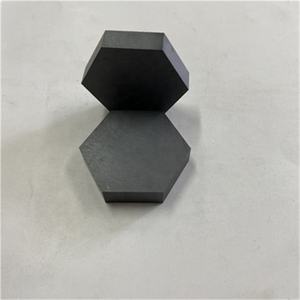
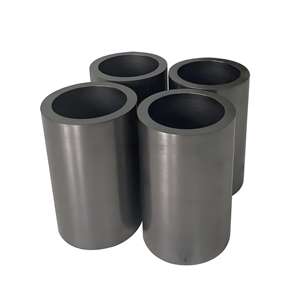
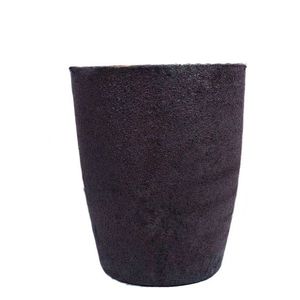
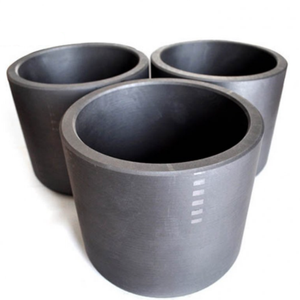
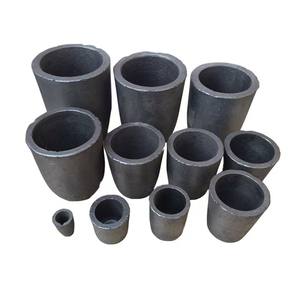
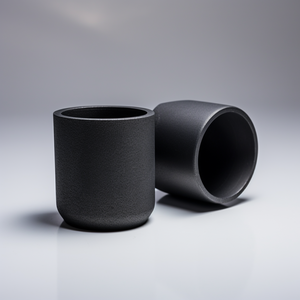
Refractory Silicon Carbide Ceramic Crucible
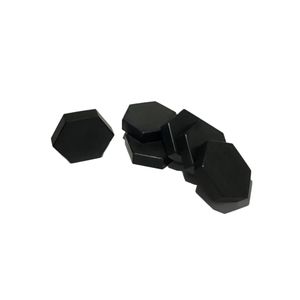
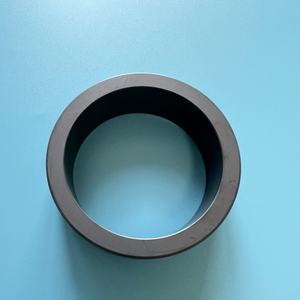
Customized Silicon Carbide Ceramic Bearing Part
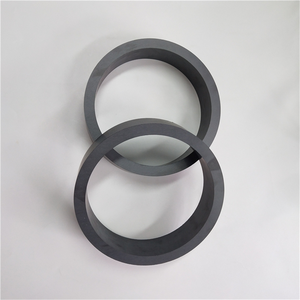
High Purity Silicon Carbide Ceramic Round Grain Parts
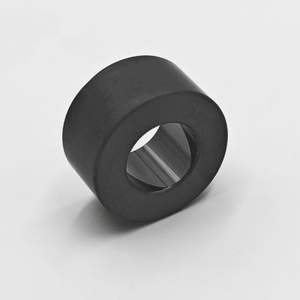
Top Quality Stable Ceramic Honeycomb Catalyst Carrier Efficient Silicon Carbide Honeycomb Ceramic
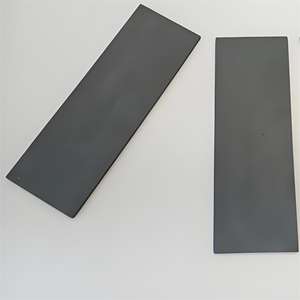
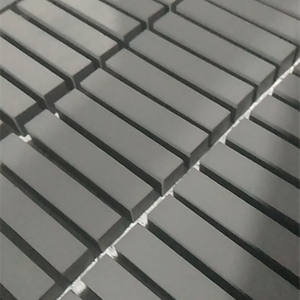
High Grade Silicon Carbide Beam Ceramics Industry with Best
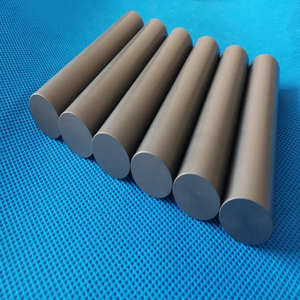
Customized Silicon Carbide Ceramic Sic Disk for Semiconductor Industry
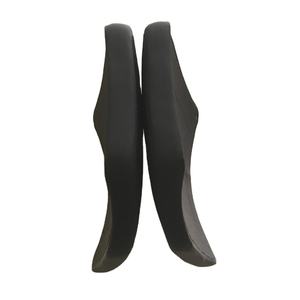
High Hardness Silicon Carbide Sic Ceramic Wafer in Semiconductor Industry
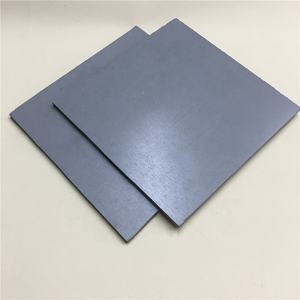
Wear Resistant Silicon Carbide Sic Ceramic Dewatering Element for Paper Industry
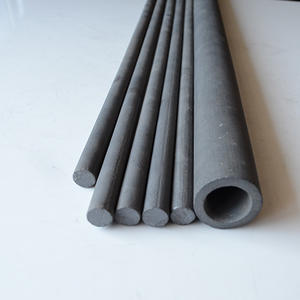
Hot Strength Silicon Carbide Ceramic Wear Lining Bricks Tubes for Mining Industry
Overview of Silicon Carbide Ceramic
Silicon Carbide (SiC) is a superior synthetic ceramic material renowned for its exceptional performance in the most demanding industrial environments. It is a compound of silicon and carbon, manufactured through various high-temperature processes like sintering, reaction bonding, and chemical vapor deposition. This versatility in manufacturing allows for the creation of components with tailored properties, making SiC a cornerstone of modern advanced ceramics. Its unique combination of high thermal conductivity, extreme hardness, and excellent chemical resistance positions it as the material of choice where traditional metals and ceramics fall short.
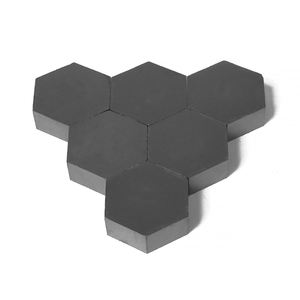
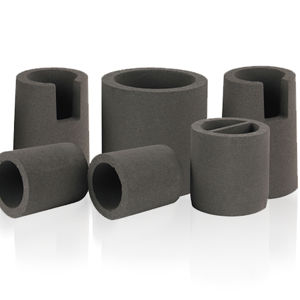
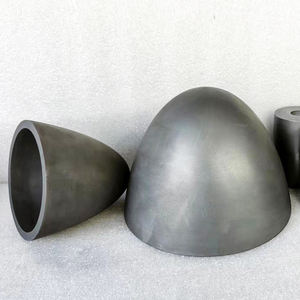


Features of Silicon Carbide Ceramic
Silicon Carbide's dominance in high-end applications is driven by a suite of unparalleled properties:
- Exceptional Thermal Properties: Possesses high thermal conductivity (exceeding that of many metals) and outstanding thermal shock resistance, enabling rapid heat dissipation and stability in fluctuating temperatures.
- Extreme Hardness & Wear Resistance: With a hardness second only to diamond and boron carbide, SiC offers superior resistance to abrasion, erosion, and mechanical wear, significantly extending component lifespan.
- Superior Chemical Inertness: Highly resistant to corrosion from acids, alkalis, and molten salts, making it ideal for aggressive chemical processing environments.
- High Strength and Stiffness: Maintains exceptional mechanical strength and rigidity at elevated temperatures, up to 1650°C.
- Low Thermal Expansion: Exhibits a very low coefficient of thermal expansion, which minimizes dimensional changes under thermal stress.
- Semiconductor Properties: Certain grades of SiC are wide-bandgap semiconductors, making them essential for next-generation high-power, high-frequency electronic devices.
Applications of Silicon Carbide Ceramic
The robust feature set of Silicon Carbide enables its use across a diverse range of high-tech industries:
- Industrial & Mechanical: Seal faces, bearings, pump components, spray nozzles, and wear plates in demanding process industries.
- Automotive & Aerospace: Brake discs, turbine components, and lightweight armor systems.
- Energy & Environment: Heat exchangers for concentrated solar power, components in nuclear reactors, and liners for cyclones in power plants.
- Electronics & Semiconductor: Wafer processing fixtures (susceptors, paddles), substrates for high-power electronics, and RF components.
- Chemical Processing: Valves, thermowells, and piping systems exposed to highly corrosive media.
Specification Table of Silicon Carbide Ceramic
| Property | Unit | Sintered α-SiC (Typical Value) | Reaction-Bonded SiC (Typical Value) |
|---|---|---|---|
| Density | g/cm³ | 3.10 - 3.15 | 3.05 - 3.10 |
| Flexural Strength | MPa | 400 - 500 | 350 - 450 |
| Fracture Toughness | MPa·m¹/² | 3.5 - 4.5 | 3.5 - 4.0 |
| Hardness (Vickers) | GPa | 24 - 28 | 22 - 26 |
| Thermal Conductivity | W/m·K | 100 - 140 | 120 - 160 |
| Coefficient of Thermal Expansion | 10⁻⁶/K (RT-1000°C) | 4.2 - 4.8 | 4.3 - 4.8 |
| Max. Use Temperature (Inert) | °C | ~1650 | ~1350 |
| Chemical Resistance | - | Excellent | Excellent (except to HF, strong alkalis) |

Company Profile
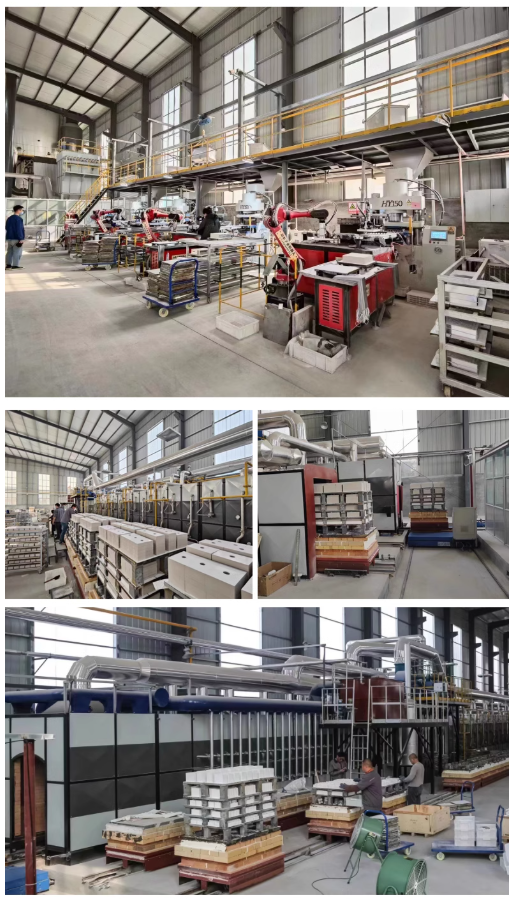
Tanki New Materials Co.Ltd. focus on the research and development, production and sales of ceramic products, serving the electronics, ceramics, chemical and other industries. Since its establishment in 2015, the company has been committed to providing customers with the best products and services, and has become a leader in the industry through continuous technological innovation and strict quality management.
Our products includes but not limited to Aerogel, Aluminum Nitride, Aluminum Oxide, Boron Carbide, Boron Nitride, Ceramic Crucible, Ceramic Fiber, Quartz Product, Refractory Material, Silicon Carbide, Silicon Nitride, ect. please feel free to contact us.
Payment Methods
T/T, Western Union, Paypal, Credit Card etc.
Shipment Methods
By air, by sea, by express, as customers request.
5 FAQs of Silicon Carbide Ceramic
1. What is the difference between Sintered and Reaction-Bonded Silicon Carbide?
Sintered SiC (SSiC) is a single-phase, high-purity material with superior corrosion resistance and high-temperature strength. Reaction-Bonded SiC (RBSiC) contains some free silicon, which makes it easier to manufacture complex shapes but slightly reduces its chemical resistance and maximum service temperature.
2. Can Silicon Carbide be machined to precise tolerances?
Yes, but it is a very challenging process. In its fully dense form, SiC can only be machined using diamond grinding techniques. It is most cost-effective to form components to near-net shape during sintering and then finish with precision grinding.
3. Is Silicon Carbide brittle like other ceramics?
Yes, like all advanced ceramics, SiC is a brittle material with limited fracture toughness compared to metals. This is a key design consideration, and components must be engineered to avoid tensile stress concentrations.
4. How does Silicon Carbide compare to Alumina or Zirconia?
SiC generally offers higher thermal conductivity, superior hardness, and better thermal shock resistance than Alumina. Compared to Zirconia, SiC is harder, more thermally conductive, and has a higher maximum use temperature, though Zirconia typically has higher fracture toughness.
5. Is Silicon Carbide electrically conductive?
Monolithic SiC is a semiconductor. Its electrical resistivity can vary significantly with temperature and the specific type/doping, ranging from semi-insulating to highly conductive, which is exploited in electronic applications.