Professional industry ceramic supplier, silicon nitride, silicon carbide, aluminum nitride and any other kinds of ceramics.

Introduction
In the challenging field of industrial ceramics, silicon carbide has proven itself as the go-to material for truly demanding applications. When engineering teams and buyers need to decide between Recrystallized Silicon Carbide (RSiC) and Reaction Bonded Silicon Carbide (SiSiC), the choice isn’t always obvious. They share the silicon carbide name and deliver impressive performance, but each excels in different situations, driven by their unique microstructures and processing methods. The porous nature of RSiC provides outstanding thermal shock resistance and permeability, while the fully dense SiSiC offers superior mechanical strength and wear resistance. Pick the wrong one, and you could be looking at early breakdowns, costly downtime, or budget overruns. Therefore, a precise understanding of the operating environment—including temperature extremes, mechanical stress, and chemical exposure—is essential for making the optimal, cost-effective selection.
This comprehensive guide demystifies the RSiC vs. SiSiC decision, providing clear, actionable insights to ensure you select the optimal material for your specific application. Whether you’re designing components for a 1650°C kiln or precision seals for a high-speed pump, understanding these differences is crucial for success.
The Core Differences between SiSiC and RSiC
SiSiC
SiSiC is an advanced engineering ceramic manufactured through a special “reactive bonding” process and its final product is mainly composed of SiC and a small amount of silicon. What’s more, its standout features are Near Net Shape Forming and Low Sintering Shrinkage, offering high dimensional accuracy and suitability for manufacturing large-sized and complex geometries.
RSiC
RSiC is produced through a high temperature(~2400°C)recrystallization process, containing no sintering additives and the second phase, which makes it a pure silicon carbide structure. This high chemical purity and excellent high-temperature stability make it an ideal choice for extreme environments.
The Detailed Performance Comparison – Beyond the Specifications Sheet
| SiSiC | RSiC | unit | |
| Silicon carbide content | 98.5-99% | 98.5-99% | % |
| Maximum Service Temperature | 1380 | 1650 | ℃ |
| Density | ≥3.02 | ≥2.7 | g/cm³ |
| Air hole rate | ≤0.1 | 15 | % |
| Bending resistance | 250(20℃) | 80-100(20℃) | Mpa |
| 280(1200℃) | 90-110(1200℃) | Mpa | |
| Elasticity modulus | 330 (20℃) | 280 (20℃) | Gpa |
| Thermal Conductivity | 120(20℃) | 100(20℃) | W/m*k |
| 45(1200℃) | 35(1200℃) | W/m*k | |
| Thermal expansivity | 4.5 | 4.6 | K-1×10⁻⁶ |
Temperature Performance: The Most Critical Differentiator
For RSiC: The ability to perform reliably at temperatures up to 1650°C in oxidizing atmospheres makes RSiC the undisputed champion for extreme heat applications. This capability comes from its pure SiC composition and absence of low-melting-point phases. In high-temperature kilns for ceramics, battery materials, or advanced metals, RSiC components maintain dimensional stability where other materials would deform or fail.
For SiSiC: With a practical limit of 1380°C due to the presence of free silicon, SiSiC excels in what might be called “high but not extreme” temperature applications. The free silicon begins to soften and oxidize above this threshold, limiting its use. However, for the vast majority of industrial applications operating between 800°C and 1350°C, SiSiC offers outstanding performance.
Mechanical Properties: Strength vs. Purity Trade-off
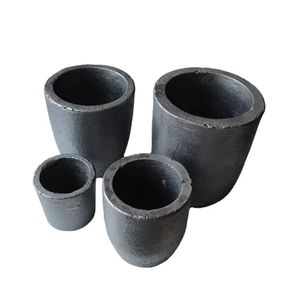
SiSiC’s Mechanical Superiority: With flexural strength of 250 MPa at room temperature (rising to 280 MPa at 1200°C) and a remarkable Mohs hardness of 13, SiSiC delivers exceptional mechanical performance. Its fully dense structure and the reinforcing effect of the silicon phase make it ideal for applications requiring resistance to mechanical shock, abrasion, or high stress.
RSiC’s Structural Reality: The inherent porosity of RSiC (15-20%) necessarily reduces its mechanical strength compared to fully dense ceramics. However, this trade-off is intentional—the porosity is stable and interconnected, contributing to the material’s exceptional thermal shock resistance. While careful handling is required, once installed in high-temperature service, RSiC demonstrates remarkable structural integrity.
Chemical Resistance: The Purity Advantage
RSiC’s Universal Resistance: As a 100% pure silicon carbide material, RSiC exhibits nearly universal chemical inertness. It withstands prolonged exposure to strong acids (including hydrofluoric acid), strong bases, molten metals, and aggressive chemical environments. This makes it indispensable in chemical processing, semiconductor manufacturing, and metallurgical applications where chemical purity is paramount.
SiSiC’s Chemical Profile: SiSiC performs exceptionally well in most corrosive environments, resisting attack from acids, bases, and salts. However, its Achilles’ heel is the free silicon phase, which is aggressively attacked by hydrofluoric acid (HF) and hot concentrated alkalis. In applications where these chemicals are present, SiSiC must be avoided in favor of RSiC or other pure ceramics.
Application Guidelines – Making the Right Choice When to Choose Recrystallized Silicon Carbide (RSiC)

Select RSiC when your application involves:
- Temperatures exceeding 1400°C – Kiln rollers, beams, and setters for advanced ceramics, lithium-ion battery materials, or powder metallurgy
- Aggressive chemical environments – Components exposed to HF, hot alkalis, or molten metals in chemical processing equipment
- Critical high-temperature dimensional stability – Support structures in sintering furnaces where creep resistance is essential
- Frequent thermal cycling – Applications requiring exceptional thermal shock resistance in rapidly changing temperature environments
- Ultra-high purity requirements – Semiconductor processing components, specialized crucibles, or research applications
Real-World RSiC Success Story: A leading manufacturer of lithium-ion battery materials switched to RSiC setters for their high-temperature calcination process. Despite a higher initial cost, the RSiC setters lasted three times longer than their previous material, with zero contamination of the sensitive battery materials, resulting in a 40% reduction in total cost of ownership.
When to Choose Reaction Bonded Silicon Carbide (SiSiC)
Select SiSiC when your requirements include:
- Complex geometry and tight tolerances – Precision seals, nozzles, wear parts, or semiconductor wafer handling components
- Superior wear resistance – Pump seals, slurry handling components, sandblasting nozzles, or mining equipment parts
- High mechanical load at temperatures below 1380°C – Structural components in industrial furnaces, heat treatment fixtures
- Cost-effective performance – Applications where the balance of performance and manufacturability drives value
- Rapid prototyping or custom designs – The near-net-shape capability reduces lead time and tooling costs
A porous material (RSiC) and a dense one (SiSiC): RSiC, or reaction-sintered porous silicon carbide, retains an interconnected microporous structure internally. This characteristic endows it with lightweight properties, excellent thermal insulation, and good air permeability, making it commonly used in high-temperature filtration, catalyst carriers, and thermal protection systems. Its “breathability” is a key advantage. SiSiC, or silicon-infiltrated dense silicon carbide, eliminates pores through silicon infiltration, achieving a structure approaching theoretical density. This endows it with extremely high mechanical strength, hardness, and outstanding corrosion and wear resistance, making it ideal for mechanical seals, high-performance bearings, and structural components in demanding environments. Though both belong to the silicon carbide family, their core difference in porosity leads to distinct mechanical, thermal, and permeation properties. Consequently, they serve different roles in industrial applications, addressing the contrasting challenges of “isolation” and “load-bearing.”
Real-World SiSiC Success Story: A pump manufacturer struggling with seal failures in abrasive slurry applications switched to SiSiC mechanical seals. The seals demonstrated ten times the service life of their previous alumina ceramic seals, reducing maintenance downtime by 85% and significantly lowering total operating costs.
Partner with Experts for Optimal Selection
The RSiC vs. SiSiC decision represents a classic engineering trade-off: purity and extreme temperature capability versus mechanical strength and manufacturing flexibility. There is no universally “better” material—only the right material for your specific application.
At our company, we bring silicon carbide expertise to every customer challenge. Our applications engineers don’t just sell materials—we also solve problems. We work closely with you to understand your operating conditions, performance requirements, and economic constraints to recommend the optimal silicon carbide solution.
Supplier
Tanki New Materials Co.Ltd. focus on the research and development, production and sales of ceramic products, serving the electronics, ceramics, chemical and other industries. Since its establishment in 2015, the company has been committed to providing customers with the best products and services, and has become a leader in the industry through continuous technological innovation and strict quality management.
Our products includes but not limited to Aerogel, Aluminum Nitride, Aluminum Oxide, Boron Carbide, Boron Nitride, Ceramic Crucible, Ceramic Fiber, Quartz Product, Refractory Material, Silicon Carbide, Silicon Nitride, ect. If you are interested in SiC ceramic, please feel free to contact us.