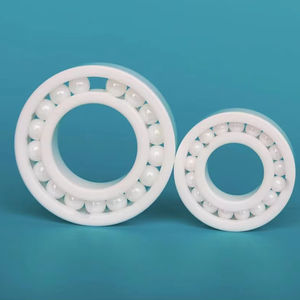
Professional industry ceramic supplier, silicon nitride, silicon carbide, aluminum nitride and any other kinds of ceramics.

PRODUCT PARAMETERS
Description
Overview of Nuclear Industry B4c Boron Carbide
Nuclear Industry B4c Boron Carbide is an ultra-hard advanced ceramic, ranking as the third hardest material known after diamond and cubic boron nitride. Often referred to as “black diamond,” it is the premier choice for extreme applications requiring maximum hardness and lightweight properties, particularly in the field of ballistic armor and abrasive environments.
Features of Nuclear Industry B4c Boron Carbide
-
Exceptional Hardness: Possesses a hardness level near that of diamond, making it ideal for abrasive and wear-resistant applications.
-
Extremely Lightweight: With a low density, it offers an outstanding strength-to-weight ratio, crucial for personal and aviation armor.
-
Outstanding Ballistic Performance: The premier material for high-performance body and vehicle armor plates, capable of defeating high-velocity threats.
-
High Neutron Absorption: An excellent neutron capture cross-section makes it a key material for nuclear reactor control rods and shielding.
-
Excellent Chemical Resistance: Highly inert and resistant to acids and alkalis, ensuring performance in corrosive environments.
-
High-Temperature Stability: Maintains its properties and structure at elevated temperatures.
Specification of Nuclear Industry B4c Boron Carbide
Nuclear Industry B4C Boron Carbide is a critical material. It offers exceptional neutron absorption capabilities. This makes it vital for controlling nuclear reactions. We supply high-purity B4C tailored for nuclear applications.
The chemical composition is crucial. Our B4C boasts a minimum boron content of 76%. The carbon content stays around 22%. Impurity levels are strictly controlled. Elements like iron or silicon are kept very low. This minimizes unwanted neutron interactions.
Density is another key specification. We achieve densities exceeding 95% of the theoretical maximum. High density ensures better structural integrity. It also enhances neutron absorption efficiency. This material performs reliably under demanding conditions.
The grain size is finely controlled. We maintain a uniform, fine microstructure. This consistency is essential for predictable performance. It helps prevent cracking or failure during operation. You need dependable material in nuclear settings.
Neutron absorption is the primary function. Our B4C effectively captures thermal neutrons. It helps regulate the fission chain reaction. This control is fundamental for nuclear safety. Operators depend on its consistent behavior.
Typical nuclear applications include control rods. It’s also used in shielding components. Some reactor shutdown systems incorporate B4C pellets. The material withstands high radiation fields. Its properties remain stable over time.
Quality assurance is rigorous. Every batch undergoes thorough testing. Chemical purity is verified. Density measurements are precise. Neutron absorption cross-section is confirmed. We adhere to strict nuclear industry standards. You receive material certified for critical use.
Applications of Nuclear Industry B4c Boron Carbide
Boron carbide is a special ceramic material. It is incredibly hard. It has important uses in the nuclear industry. Its main job is absorbing neutrons. Neutrons are key particles in nuclear reactions. Boron carbide absorbs neutrons very well. This property makes it essential for nuclear safety and control.
Control rods are a major application. These rods manage the nuclear reaction inside a reactor. They are inserted into the reactor core. Boron carbide is often used inside these rods. When the rods go in, they absorb neutrons. This slows down or stops the fission reaction. Operators use them to control the reactor’s power level. They are vital for safe operation.
Boron carbide is also used in shielding. Nuclear environments produce dangerous radiation. Workers and equipment need protection. Boron carbide helps block neutrons. It is combined with other materials. This creates effective shields against radiation. These shields protect people working nearby. They also protect sensitive instruments.
Emergency shutdown systems rely on boron carbide too. These systems must stop the reactor fast if needed. They use neutron-absorbing materials. Boron carbide is a top choice here. It quickly absorbs large numbers of neutrons. This rapidly shuts down the fission chain reaction. It provides a critical safety function.
The material withstands extreme conditions. Nuclear reactors are hot and harsh environments. Boron carbide maintains its structure. It keeps absorbing neutrons effectively. This reliability is crucial for long-term use. It doesn’t break down easily under radiation. This durability is a big advantage.
Boron carbide is also found in some reactor designs. It is used in specific components. These components help regulate the reactor. The material’s properties make it uniquely suited. Its hardness helps it resist wear. Its neutron absorption keeps reactors safe.

Company Profile
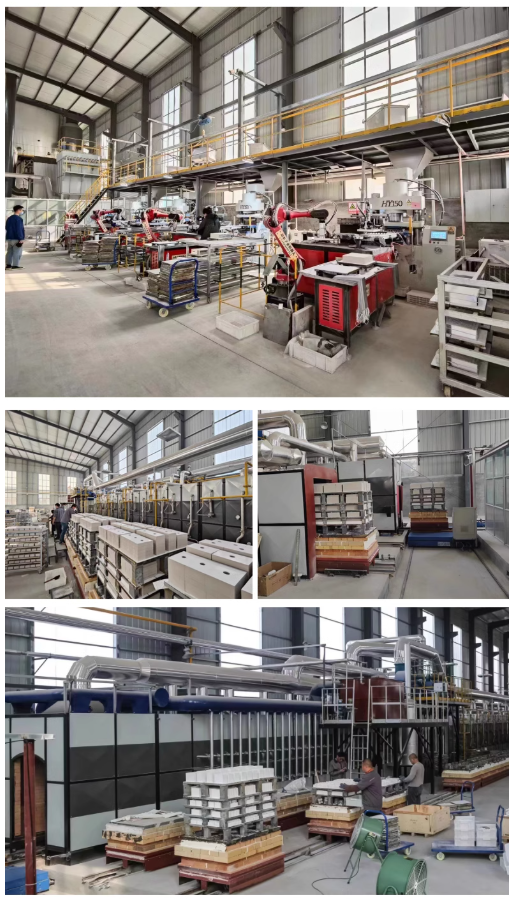
Tanki New Materials Co.Ltd. focus on the research and development, production and sales of ceramic products, serving the electronics, ceramics, chemical and other industries. Since its establishment in 2015, the company has been committed to providing customers with the best products and services, and has become a leader in the industry through continuous technological innovation and strict quality management.
Our products includes but not limited to Aerogel, Aluminum Nitride, Aluminum Oxide, Boron Carbide, Boron Nitride, Ceramic Crucible, Ceramic Fiber, Quartz Product, Refractory Material, Silicon Carbide, Silicon Nitride, ect. please feel free to contact us.
Payment Methods
T/T, Western Union, Paypal, Credit Card etc.
Shipment Methods
By air, by sea, by express, as customers request.
5 FAQs of Nuclear Industry B4c Boron Carbide
What is boron carbide?
Boron carbide is a very hard ceramic material. People often call it B4C. It looks black or dark gray. It is made from boron and carbon. Factories produce it by heating boron and carbon sources at high temperatures. This creates a tough, crystalline solid.
Why is boron carbide important in nuclear reactors?
Boron carbide is crucial for nuclear reactor safety. It absorbs neutrons very effectively. Nuclear reactors need materials that stop neutrons. This controls the nuclear chain reaction. If the reaction runs too fast, it becomes unsafe. Boron carbide helps manage this. It acts like a brake inside the reactor. Control rods use boron carbide for this purpose.
How does boron carbide shield against radiation?
Boron carbide absorbs neutrons. Neutrons are harmful particles from nuclear reactions. The boron atoms capture these neutrons. This stops the neutrons from causing more fission. It reduces radiation levels. Workers use boron carbide in shields. This protects them from radiation exposure. Walls or panels containing boron carbide block neutrons effectively.
What advantages does boron carbide have over other materials?
Boron carbide absorbs neutrons extremely well. It performs better than many alternatives. Steel or concrete alone don’t absorb neutrons as efficiently. Boron carbide is also very stable. It handles high temperatures inside reactors. It doesn’t corrode easily. This makes it reliable for long-term use. Its hardness also helps resist wear.
What forms does nuclear-grade boron carbide come in?
Nuclear-grade boron carbide must be very pure. Factories make it into powder first. Then they press this powder into shapes. Common shapes include pellets, plates, and cylinders. These forms fit into control rods or shielding components. The material quality is strictly controlled. Impurities can affect its neutron absorption ability.
REQUEST A QUOTE
RELATED PRODUCTS
High Strength Boron Carbide B4c Ceramic Board
B4c Powder Boron Carbide for Grinding Lapping Polishing Sapphire F230
Bproof B4c Ballistic Plate Cylinder with Boron Carbide Ceramic for Body Armor
Superior Quality F4-F1500 Boron Carbide B4c for Different Applications
High Abrasive Double Inlets Boron Carbide Blast Nozzle